How the Purpose-Built Path Works: From Consultation to Warranty-Backed Handoff
KEY TAKEAWAYS
- The Purpose-Built Path is Axleboy's three-phase build process – Custom Strategy, Factory-Spec Build, and The Guarantee – designed so you know exactly how your vehicle gets built before you ever book.
- Every build is completed in-house in St. Peters, Missouri by Master Certified Jeep, Toyota-certified, and ASE-certified technicians using dealer-level diagnostics.
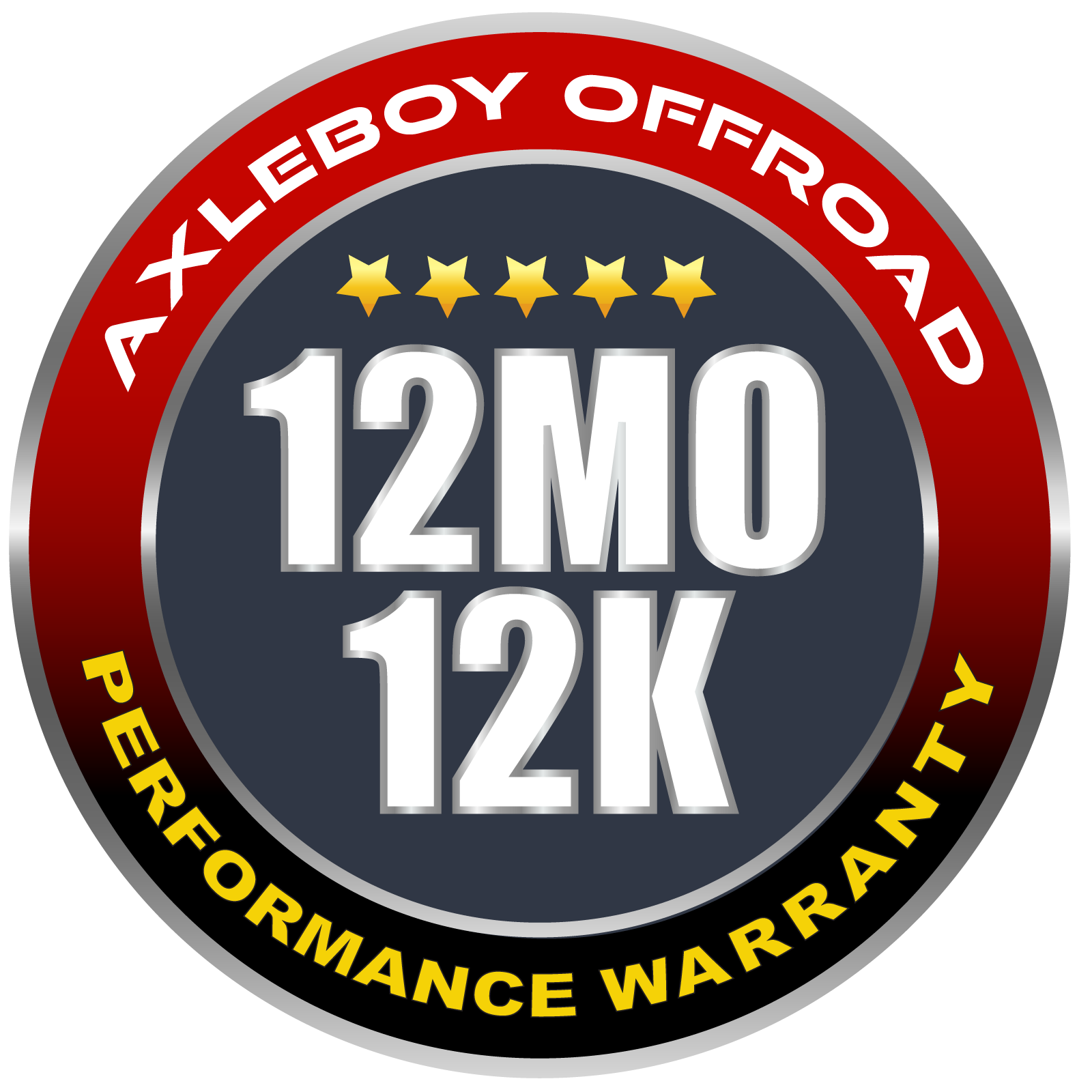
- The finished vehicle is backed by the area's only 12-month / 12,000-mile warranty covering both performance parts and labor.
- If something isn't right before handoff, the vehicle doesn't leave – it stays in the bay until it meets spec on the road and on the trail.
The Purpose-Built Path is the name for how Axleboy takes a vehicle from a first conversation to a warranty-backed handoff, broken into three phases: Custom Strategy, Factory-Spec Build, and The Guarantee. It exists because most off-road work goes sideways for the same reason – parts get installed without a plan for how the whole vehicle will behave once they're on. If you've spent any time researching a custom off-road shop in the Greater St. Louis Area, you already know the difference between a parts installer and a builder. This article walks you through all three phases so there are no surprises when you call.
The short version: your vehicle has to work on a Missouri highway Monday morning and hold up on the trail Saturday afternoon. Both matter. The Purpose-Built Path is built around that reality, and each phase carries its own accountability so nothing gets handed off half-finished.
Here is the process in plain terms before we break down each phase.
- Custom Strategy. We define how you actually use the vehicle, set a budget range, choose parts that fit the goal, and map the build order.
- Factory-Spec Build. Factory-trained technicians perform every step in-house, using dealer-level diagnostics to verify the vehicle drives correctly, not just that the parts bolted up.
- The Guarantee. The finished build is road-tested, corrected if needed, and handed off under a 12-month / 12,000-mile warranty covering both parts and labor.
Phase 1: Custom Strategy – How the Consultation Works
The consultation starts with a question most shops skip: what are you actually going to do with this vehicle? A daily commuter that sees a fire road twice a year needs a different setup than a rig running technical trails at Southern Missouri parks. Getting that answer right up front is what keeps you from paying for parts you don't need or ending up with a vehicle that rides rough on the interstate.
Here's what the Custom Strategy phase covers, step by step. First, we talk through how and where you drive – pavement percentage, trail difficulty, towing, camping, load weight. Second, we set a realistic budget range so the plan fits what you want to spend. A basic lift and tire package for a Jeep or Toyota build typically runs between $2,000 and $4,000, while advanced overlanding and performance builds with armor, lockers, roof racks, and re-gearing generally land in the $10,000 to $15,000+ range. Third, we choose parts that match the goal and explain why each one earns its place on your vehicle. Fourth, we map the build order so components that depend on each other get installed in the right sequence.
That last point matters more than it sounds. If you add larger tires without re-gearing the axles, the vehicle loses power and the transmission works harder than it should. Strategy is where those dependencies get caught. This is also where we flag the on-road tradeoffs of an aggressive setup, so you're making the call with full information instead of finding out on your commute.
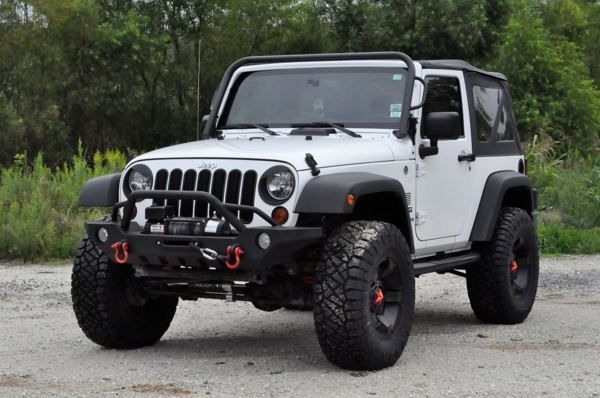
Real example, lift kit build: A customer came in wanting a 3.5-inch lift and 35-inch tires on a Wrangler he drives to work daily. In strategy, we mapped the lift, the tire size, and the re-gear together as one plan instead of three separate add-ons. That kept the highway manners intact while still clearing the tires he wanted for weekend trails.
Phase 2: Factory-Spec Build – Who Does the Work and How
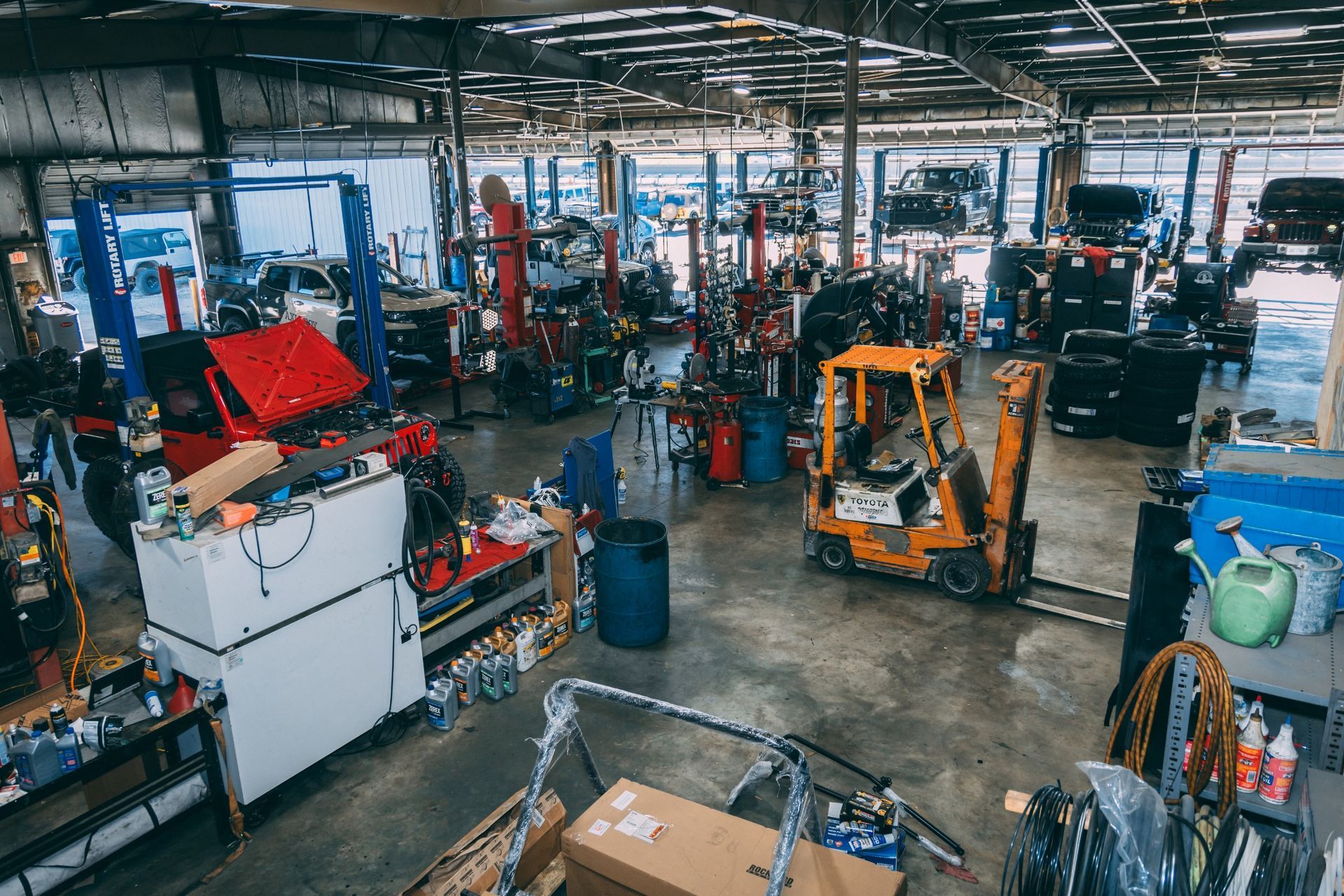
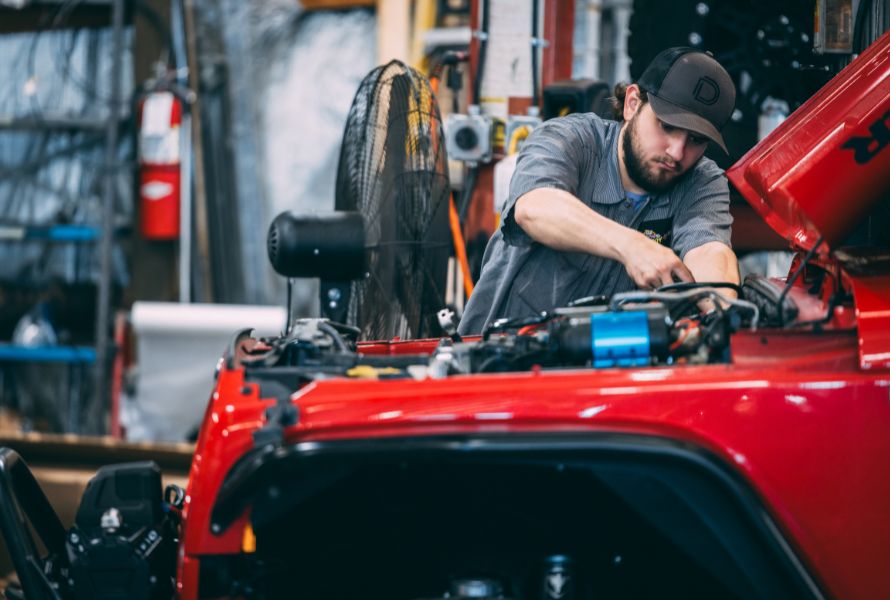
Every step of the build happens in-house, performed by factory-trained mechanics using dealer-level diagnostics. That's the whole answer to "who touches my vehicle." It isn't subcontracted, and it isn't handed to whoever is free. Axleboy is staffed by Master Certified Jeep technicians, Toyota-certified technicians, and ASE-certified professionals, and the same people who plan the build execute it.
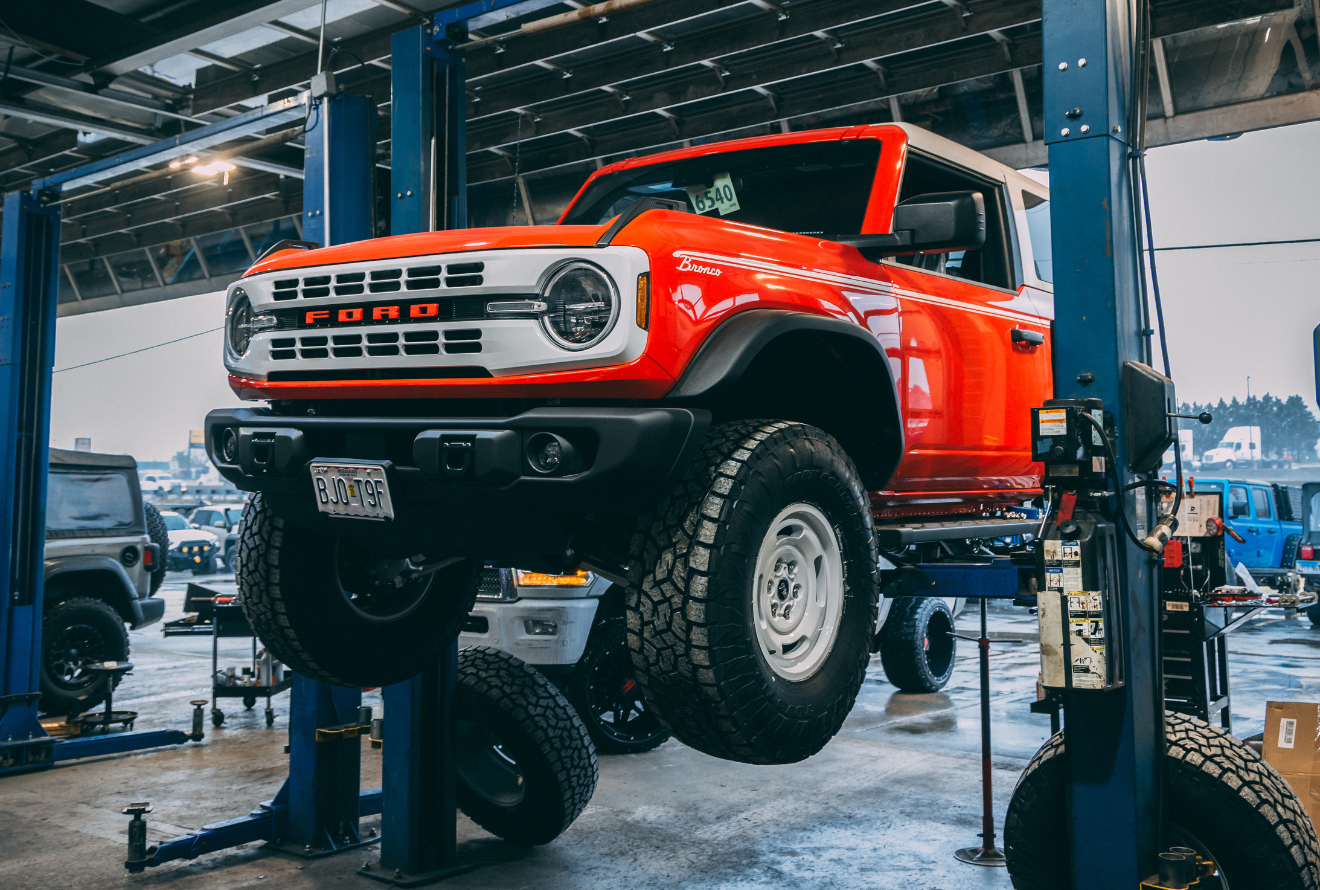
Factory-Spec means the vehicle is built to work as a complete system, not a pile of installed parts. When we mount a lift, we verify alignment, steering geometry, and driveline angles with diagnostic equipment – the same category of tools a dealer uses – because a lift that clears the tires but throws off the steering isn't finished. Common upgrades like leveling kits and standard lift installations generally require 4 to 8 hours of labor once the vehicle is in the bay. Full builds typically take 1 to 2 weeks depending on part availability and how deep the customization goes. Frame-up restorations run several months to over a year.
Armor is a good illustration of why the build phase demands real expertise. Adding a heavy front bumper changes how the front end sits and how the suspension responds, which is why it gets planned into the build rather than added as an afterthought. If you're weighing that upgrade, this guide on what to know about steel bumpers for trucks covers the tradeoffs worth understanding before you commit.
Phase 3: The Guarantee – What the 12-Month / 12,000-Mile Warranty Actually Covers
The final phase is where the vehicle earns its handoff. Before you get the keys, the build is road-tested and corrected until it meets spec. The standard is straightforward: it leaves right or it doesn't leave. If something isn't dialed in – a pull in the steering, a driveline vibration, a clearance issue under articulation – it goes back in the bay before it ever reaches you.
Once it passes, the build is backed by the area's only 12-month / 12,000-mile warranty covering both performance parts and the labor that went into installing them. This isn't a bonus stapled onto the sale. It's the structural commitment that makes the whole process accountable, because a warranty on both parts and labor means the shop has to stand behind the work, not just the box the part came in.
Here's what that warranty covers
- Performance parts installed as part of your build, for 12 months or 12,000 miles, whichever comes first
- The labor performed to install those parts, not just the components themselves
- Re-gearing work on both front and rear axles
- Suspension and lift components installed during the build
- Diagnostic verification that the vehicle performs correctly on-road and off-road before handoff
What happens if something isn't right before handoff is simple: it doesn't get handed off. The vehicle stays until the issue is resolved and re-tested. That standard is only possible because everything is done in-house – there's no third-party installer to blame and no gap between who planned the build and who is responsible for it.
Both real-world builds above finished the same way. The daily-driven Wrangler was aligned and road-tested to confirm the highway ride was intact before it went home. The overlanding rig was run through its full range of motion to verify the armor, lockers, and re-gear worked as a system under load. Both left under the same 12-month / 12,000-mile warranty. If you want to see where the work happens and read what other drivers in the area have said, you can find Axleboy Offroad in St. Peters, Missouri on the map.
SCOTT CARLINE AND THE TEAM BEHIND THE BUILD
Scott Carline brings over 30 years of experience in automotive work and team management to every build that leaves the shop. The floor is staffed by Master Certified Jeep technicians, Toyota-certified technicians, and ASE-certified professionals. That certification stack is why the work is done in-house instead of farmed out: the people who know how these vehicles are engineered are the same people turning the wrenches, and they sign off on the result.
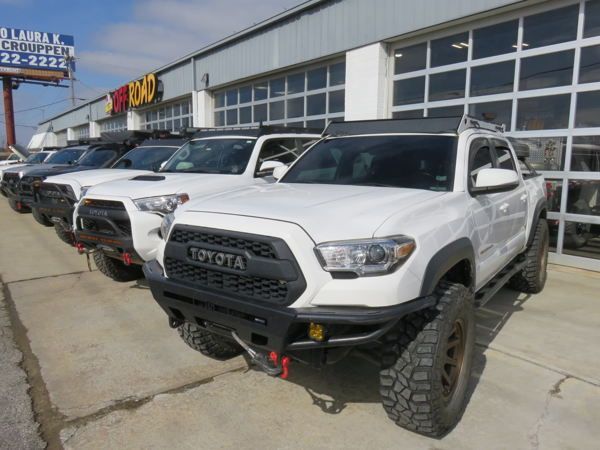
Real example, overlanding build: A customer planning long backcountry trips wanted armor, lockers, a roof rack, and re-gearing for a fully loaded rig. In the build phase, the re-gearing covered both front and rear axles to handle the added weight, and every subsystem was tested together before the vehicle moved to the final phase. You can see the kind of trip-ready setups this involves on our overlanding build page.
How to Book Your Consultation
Booking the consultation is the first step onto the Purpose-Built Path, and it's the one with the most leverage. Waiting usually means more money spent on partial fixes: a lift added here, tires added there, a re-gear later to correct what the first two threw off. Planning the whole vehicle from the start avoids that pattern and gets you a build that works as one system from day one.
The reason to start now instead of later is that the strategy phase costs you nothing but a conversation and saves you from the most common outcome in this space – a vehicle full of parts that don't work together. Axleboy is the only shop in the Greater St. Louis Area that plans, builds, and warranties both parts and labor under one roof, with certified technicians and dealer-level diagnostics standing behind every handoff.
To get started, request a quote and tell us how you actually use your vehicle. We'll walk you through the Custom Strategy phase, give you a realistic budget range, and lay out exactly what your build will take before any wrench turns. That's the whole point of the Purpose-Built Path: you know what's coming before you commit.
Frequently Asked Questions
How long does a build take once my vehicle is in the bay?
It depends on the scope of the work. Common upgrades like leveling kits and standard lift installations generally require 4 to 8 hours of labor once the vehicle is in the bay. Full builds typically take 1 to 2 weeks depending on part availability and how deep the customization goes. Frame-up restorations run several months to over a year. During the Custom Strategy phase, we give you a realistic timeline for your specific build so you know what to plan for before any work begins.
What does the 12-month / 12,000-mile warranty actually cover?
It covers both the performance parts installed as part of your build and the labor that went into installing them, for 12 months or 12,000 miles, whichever comes first. That includes re-gearing work on both front and rear axles, suspension and lift components, and the diagnostic verification that confirms the vehicle performs correctly on-road and off-road before handoff. Because everything is done in-house, there's no third-party installer to work around – the same certified technicians who plan and build your vehicle stand behind it.
What happens if something isn't right before I take the vehicle home?
It doesn't get handed off. Before you get the keys, the build is road-tested and corrected until it meets spec. If something isn't dialed in – a pull in the steering, a driveline vibration, or a clearance issue under articulation – it goes back in the bay, gets resolved, and gets re-tested. The standard is simple: it leaves right or it doesn't leave. That's only possible because the people who planned and built your vehicle are the same people responsible for the result.
Will an off-road build hurt how my vehicle drives on the highway?
Not when it's planned correctly, and that's exactly what the Custom Strategy phase is built to prevent. Your vehicle has to work on a Missouri highway Monday morning and hold up on the trail Saturday afternoon, so both get accounted for from the start. For example, adding larger tires without re-gearing the axles costs you power and makes the transmission work harder, which is why dependencies like that get mapped together instead of added one at a time. Every finished build is aligned and road-tested with dealer-level diagnostics to confirm the on-road ride is intact before it ever reaches you.
More Posts From Our Blog