Steel Bumpers for Trucks: Protection, Approach Angles, and What to Know
KEY TAKEAWAYS
- A steel bumper changes how your truck performs before it changes how it looks: it shifts weight to the front axle, alters your approach angle, and affects braking and fuel economy in ways you feel every day.
- The right steel bumper improves your approach angle by removing overhang and sitting higher and tighter to the frame, which lets you climb obstacles the factory plastic bumper would have caught.
- Winch integration, mounting hardware, and material thickness matter more than finish or brand, because a poorly mounted bumper puts stress on the frame instead of protecting it.
- Professional installation matters when the bumper carries a winch and recovery loads, because the mount has to transfer force into the frame correctly or the whole assembly becomes a liability.
A steel bumper is a frame-mounted replacement for your truck's factory bumper, built to protect the front or rear of the vehicle, mount recovery gear like a winch, and clear obstacles the stock bumper would drag across. Most people shopping for one start with how it looks. That is the wrong place to start. A steel bumper changes the physics of your truck, and if you understand those changes before you buy, you end up with a build that works on I-70 Monday morning and on a rutted trail Saturday afternoon. If you are researching steel bumpers and other off-road accessories for trucks, this covers the engineering trade-offs the product pages skip.
We build off-road vehicles at Axleboy in St. Peters, and we install a lot of steel bumpers. The ones that work were chosen for the right reasons. Here is what those reasons are.
How a Steel Bumper Changes Your Approach Angle
Approach angle is the steepest incline your truck can climb into before the front bumper hits the obstacle. Measure it as the angle between the ground and a line running from the front tire's contact patch up to the lowest point of the front of the truck. A bigger number means you can climb steeper terrain without scraping.
Factory plastic bumpers hurt your approach angle in two ways. They hang low, and they stick out past the frame to meet crash-test and pedestrian-safety standards. That overhang is the first thing to catch on a rock ledge or a steep driveway entrance.
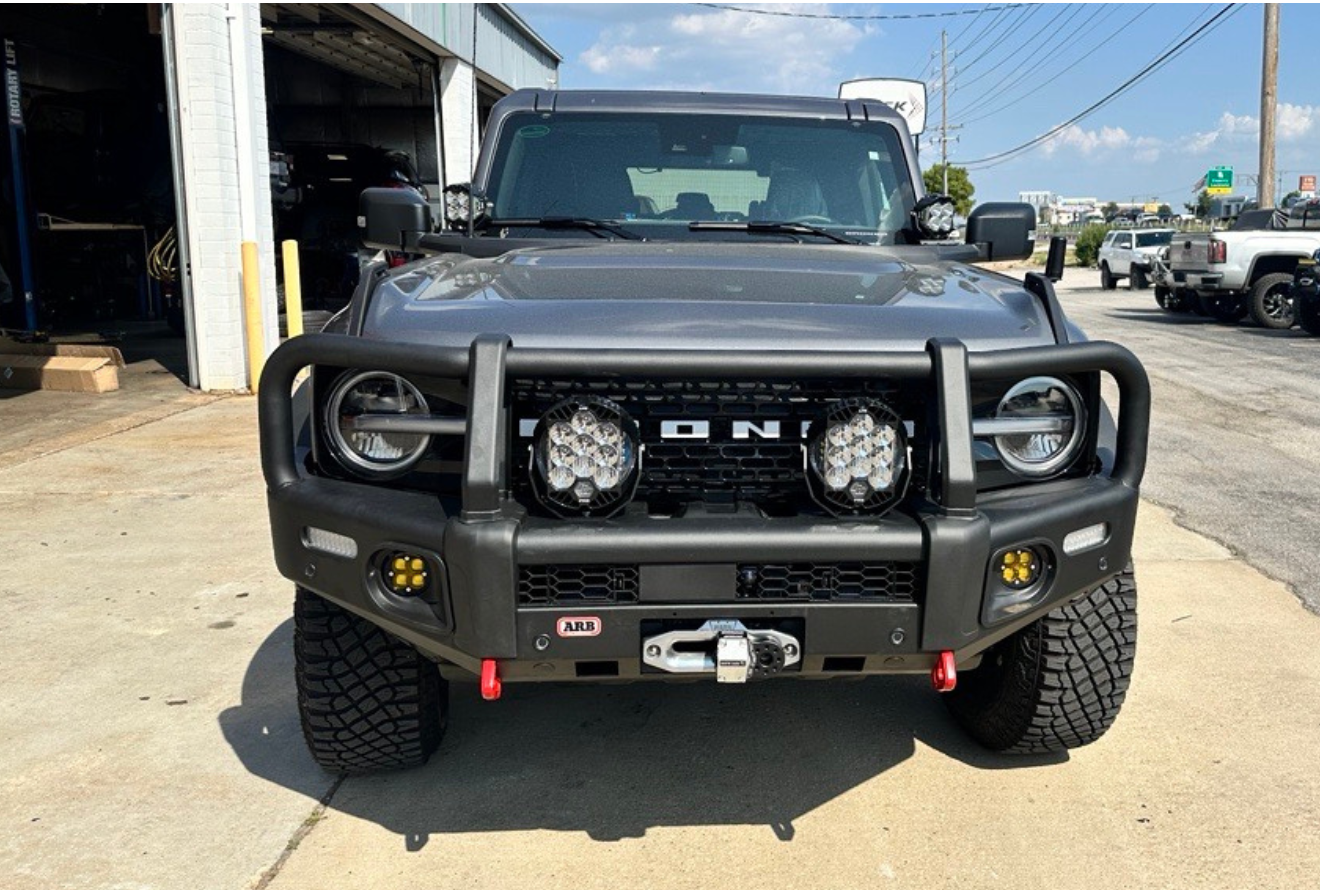
A well-designed steel bumper improves approach angle by removing that overhang and tucking tighter to the frame. Many designs also sit higher and cut away the lower corners, so the leading edge of the truck is farther back and higher up. The result is real: obstacles you used to avoid become obstacles you drive over.
Not every steel bumper does this. Some full-width designs with brush guards and light bars hang just as low as the factory unit and add overhang back with a hoop out front. If approach angle is your goal, a stubby or mid-width bumper that trims the corners does more for you than a tall full-width design covered in accessories.
What the Added Weight Does to Braking and Fuel Economy
A steel front bumper typically adds 60 to 150 pounds over the factory plastic unit, and that weight sits ahead of the front axle. That location matters as much as the number.
Weight in front of the front axle affects steering feel, braking distance, and how the front suspension behaves over bumps. Your factory brakes were sized for the truck's original weight. Add a heavy bumper plus a winch, and stopping distances grow, especially fully loaded on a downhill grade. It is not dangerous on its own, but it is a change you should account for, particularly if you tow.
Fuel economy takes a hit too, though usually a modest one from the bumper alone. The bigger fuel penalty comes from what people add alongside it: larger tires, a lift, a roof rack, and armor everywhere. Each addition compounds. A steel bumper is rarely the whole story on a truck that has lost four miles per gallon.
This is why we do not treat a bumper as an isolated part. It changes the front-end weight balance, which affects the suspension you should be running, which affects the tire and gearing that keep the truck driving right on the highway. Pulling one lever moves the others.
WHY THE MOUNT MATTERS MORE THAN THE BRAND
A steel bumper is only as good as how it transfers load into the frame. When you mount a winch and pull a 6,000-pound truck out of the mud, that force runs through the bumper into the frame mounts. If those mounts are undersized or installed with the wrong hardware, you are not protecting the frame. You are stressing it. This is the single most common thing done wrong on a home install, and it is invisible until the day you actually need the winch.
How Winch-Mount Integration Should Work
If you plan to run a winch, buy a bumper that was engineered to hold one. A winch-ready steel bumper has an internal cradle or mounting plate that positions the winch correctly and ties the recovery loads back into the frame, not just into the bumper skin.
The details that matter here are the fairlead position, the clearance for the winch motor and solenoid, and whether the mounting bolts thread into a reinforced plate or into thin sheet. A winch under load generates far more force than most people expect. The bumper has to send that force somewhere structural.
Recovery points are part of this too. Look for a bumper with integrated D-ring or shackle mounts that are welded to the load-bearing structure. Tow hooks bolted to the surface are for show. When you are anchoring a recovery strap under tension, you want steel that runs back to the frame.
Getting the winch, the bumper, and the electrical routing to work together is where a lot of driveway installs stall out. The parts fit, but the wiring, the fairlead angle, and the frame reinforcement need to be handled as one job. This is the kind of integration our factory-spec build process is built to get right the first time.
Material, Thickness, and Finish Options
Steel bumpers are usually made from mild steel plate, most commonly in the 3/16-inch to 1/4-inch range for the main structure. Thicker steel resists impact and deformation better but adds weight, so the good designs use heavier plate where it takes hits and lighter material where it does not.
Finish is about longevity in Missouri weather, not just appearance. Here are the functional benefits a properly built and finished steel bumper delivers beyond looks:
Protects the frame horns and radiator support from animal strikes and low-speed impacts that would total a plastic bumper.
Provides real recovery points rated for winching and strap loads, so you are not anchoring to suspension components.
Improves approach angle by removing factory overhang and clearing the lower corners.
Holds a winch in a position that keeps the line straight and the motor cool.
Resists rust longer when powder-coated or bed-lined over properly prepped steel, which matters through road-salt season.
Mounts auxiliary lighting on a rigid platform that does not vibrate the beam out of alignment on rough roads.
Powder coating gives the hardest, most chip-resistant finish, but any exposed steel that gets scratched down to bare metal will rust if you ignore it. Bed-liner coatings are easier to touch up. Bare or raw steel looks right on some builds but demands maintenance you should be honest with yourself about before you choose it.
Professional Install Versus Garage Install
You can bolt a basic steel bumper on in a driveway with hand tools. Whether you should depends on what the bumper is doing.
A simple front bumper with no winch and no wiring is within reach of a capable owner with a jack, a socket set, and a helper to hold the weight. Even then, torque specs on the frame bolts matter, and a bumper hung slightly crooked will bug you every time you look at it.
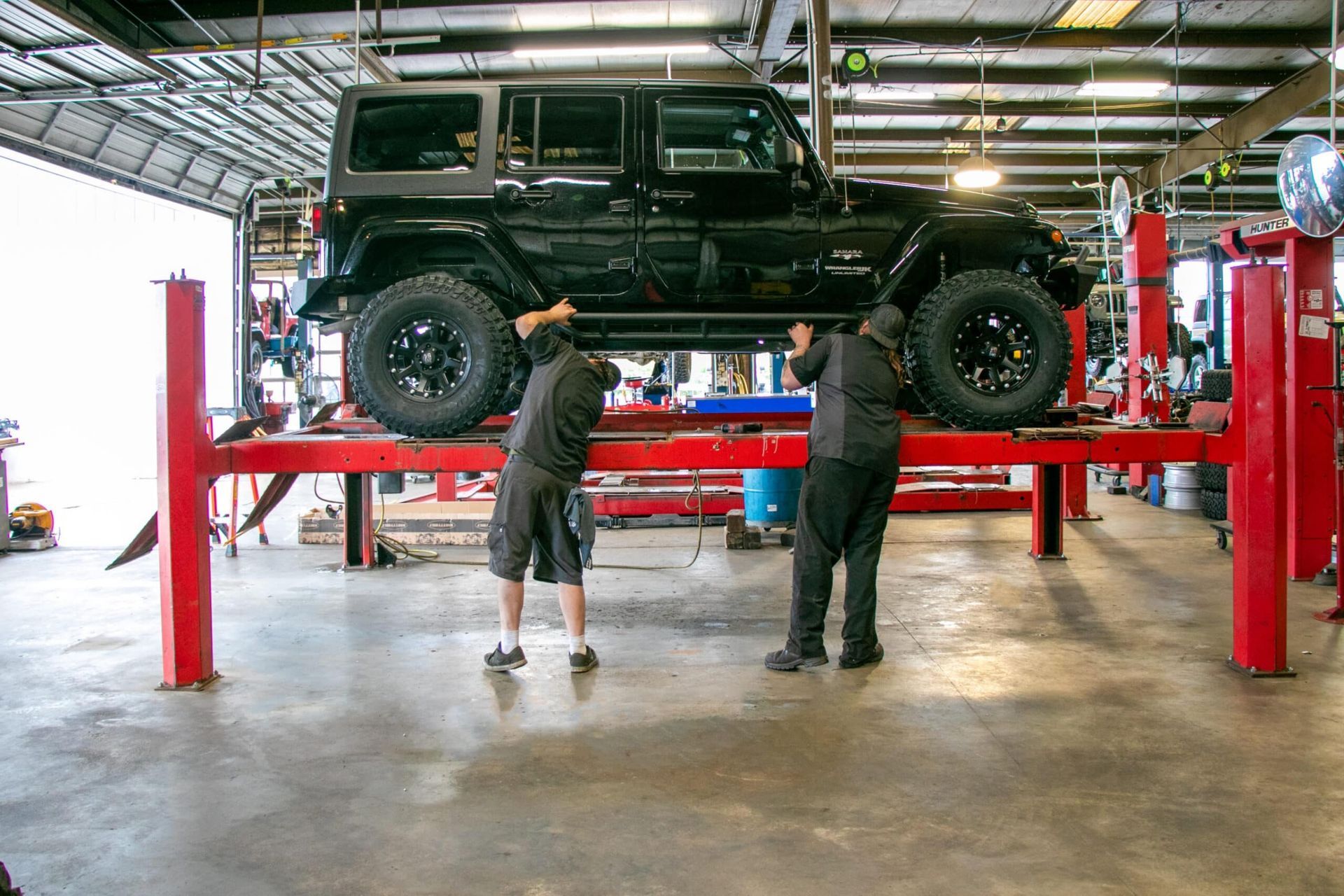
The install gets harder fast once a winch, integrated lighting, and recovery loads enter the picture. Now you are routing high-amperage winch wiring, confirming the frame mounts can carry recovery force, aligning the fairlead, and often relocating factory sensors or fog lights. Do any of those wrong and the failure shows up at the worst possible time.
Here is what to check before you buy, whether you install it yourself or bring it to us
- Confirm the bumper is a verified fit for your exact year, make, and model, including trim-specific sensor and camera cutouts.
- Verify it is rated to hold the winch you intend to run, and that the mounting plate is reinforced, not thin sheet.
- Check that recovery points are welded to load-bearing structure, not bolted to the surface.
- Account for the added front weight against your current suspension and braking, especially if you tow or already run larger tires.
A real-world example: we did a steel front bumper swap on a Chevy Colorado that came in for a winch install. The owner had bought a mid-width steel bumper and wanted it mounted right. Once we pulled the factory plastic unit and installed the steel bumper with the winch cradled and wired into a reinforced mount, the front end sat lower on the springs than before, so we corrected the front suspension to carry the new weight. The result drove tighter and more planted on the highway than the owner expected, and the improved approach angle let the truck clear the trailhead obstacles that used to scrape the plastic bumper off. Same truck, better on the road and better on the trail.
That is the standard we hold every accessory install to. If you want to see where we work and how we handle builds, our shop in St. Peters serves the Greater St. Louis area.
Every month you wait with a factory plastic bumper is a month of exposed frame horns and no real recovery point if you get stuck. But rushing a steel bumper install with a mismatched winch mount or ignored suspension change just moves the problem. The point is to get it right once.
At Axleboy, all accessory work is done in-house by our Master Certified Jeep, Toyota-certified, and ASE-certified technicians, and it is backed by the area's only 12-month, 12,000-mile warranty covering both the performance parts and the labor. That warranty exists because our people do the work and stand behind it. It leaves right, or it does not leave.
Bring us your truck and your goals, and we will tell you which steel bumper actually fits how you drive on road and off. Request a quote and we will map the bumper, the winch, and the suspension work as one plan built for your vehicle.
Frequently Asked Questions
Will a steel bumper make my truck harder to drive or brake on the highway?
A steel front bumper typically adds 60 to 150 pounds ahead of the front axle, and that weight affects steering feel and braking distance, especially when you are loaded or towing on a downhill grade. On its own it is a manageable change, but it rarely comes alone. Larger tires, a lift, and a winch each add weight and compound the effect. When we install a bumper, we account for the new front-end weight against your current suspension and brakes, and we correct the suspension if the front is sitting low. Done right, the truck drives planted on I-70, not nose-heavy. That is the on-road half of the job, and it matters as much to us as trail performance.
Do I need professional installation, or can I mount a steel bumper myself?
A simple front bumper with no winch and no wiring is within reach of a capable owner with a jack, a socket set, and a helper to handle the weight, though torque specs on the frame bolts still matter and a crooked hang will bother you every time you see it. The job gets harder fast once a winch, integrated lighting, or recovery loads are involved. You are routing high-amperage winch wiring, confirming the frame mounts can carry recovery force, aligning the fairlead, and often relocating factory sensors. Get any of those wrong and the failure shows up the day you actually need the winch. If your bumper carries a winch or recovery loads, professional install protects you from that.
What does the Axleboy warranty cover on a steel bumper install?
All accessory work at our St. Peters shop is done in-house by our Master Certified Jeep, Toyota-certified, and ASE-certified technicians, and it is backed by the area's only 12-month, 12,000-mile warranty covering both the performance parts and the labor. That warranty is not an add-on. It is the standard we hold the work to, because our own people do the install and sign off on it. If the bumper, the winch mount, and the wiring are not right, the truck does not leave.
How do I know which steel bumper is right for my truck?
Start with how you actually drive rather than how the bumper looks. If approach angle is your goal, a stubby or mid-width design that trims the lower corners does more than a tall full-width bumper loaded with a hoop and light bar. If you are running a winch, the bumper needs an engineered cradle and reinforced mounting plate, plus recovery points welded to load-bearing structure rather than bolted to the surface. It also has to be a verified fit for your exact year, make, model, and trim, including sensor and camera cutouts. Bring us your truck and your goals and we will tell you which bumper fits how you drive on road and off, then map the bumper, winch, and any suspension work as one plan.
More Posts From Our Blog