What Happens After a Lift Kit Install: Alignment, Re-Gear, and What Most Shops Skip
KEY TAKEAWAYS
- Post-install alignment and re-gearing are critical steps that many shops skip, leading to premature tire wear and poor drivability on daily drivers.
- Proper lift kit installation requires recalibrating brake lines, ABS sensors, and driveline angles to maintain highway performance and safety.
- A complete lift job includes warranty coverage for both parts and labor, ensuring your vehicle drives correctly on Missouri roads and trails.
- Without proper post-install work, lifted vehicles experience vibration, poor fuel economy, and component failure that can cost thousands to fix later.
A lift kit installation transforms your vehicle's capability, but the parts swap is only the beginning of the process. What happens after the lift components are bolted on determines whether your Jeep or Toyota drives like a purpose-built machine or struggles with vibration, wandering, and premature wear.
Most shops in the St. Louis area treat lift kit installations as a parts replacement job. They install the springs, shocks, and spacers, then send you home. The result is a vehicle that sits higher but drives poorly on Highway 40 and performs inconsistently on the trail.
Here's what separates a proper lift installation from a parts swap – and why the work that happens after the kit goes on matters more than the brand name on the box.
Why Alignment Matters More After a Lift Than Before
Installing a lift kit changes every angle in your suspension geometry. Your camber, caster, and toe settings shift when the vehicle sits higher, and factory alignment specifications no longer apply to your setup.
Without post-lift alignment, your tires will wear unevenly within the first few thousand miles. More importantly, your vehicle will wander on the highway, require constant steering corrections, and handle unpredictably in emergency situations.
A proper post-lift alignment goes beyond adjusting toe settings. The technician must account for the new suspension angles, verify that steering components aren't binding, and ensure the vehicle tracks straight under load. This requires alignment equipment that can handle lifted vehicles and technicians who understand how geometry changes affect real-world driving.
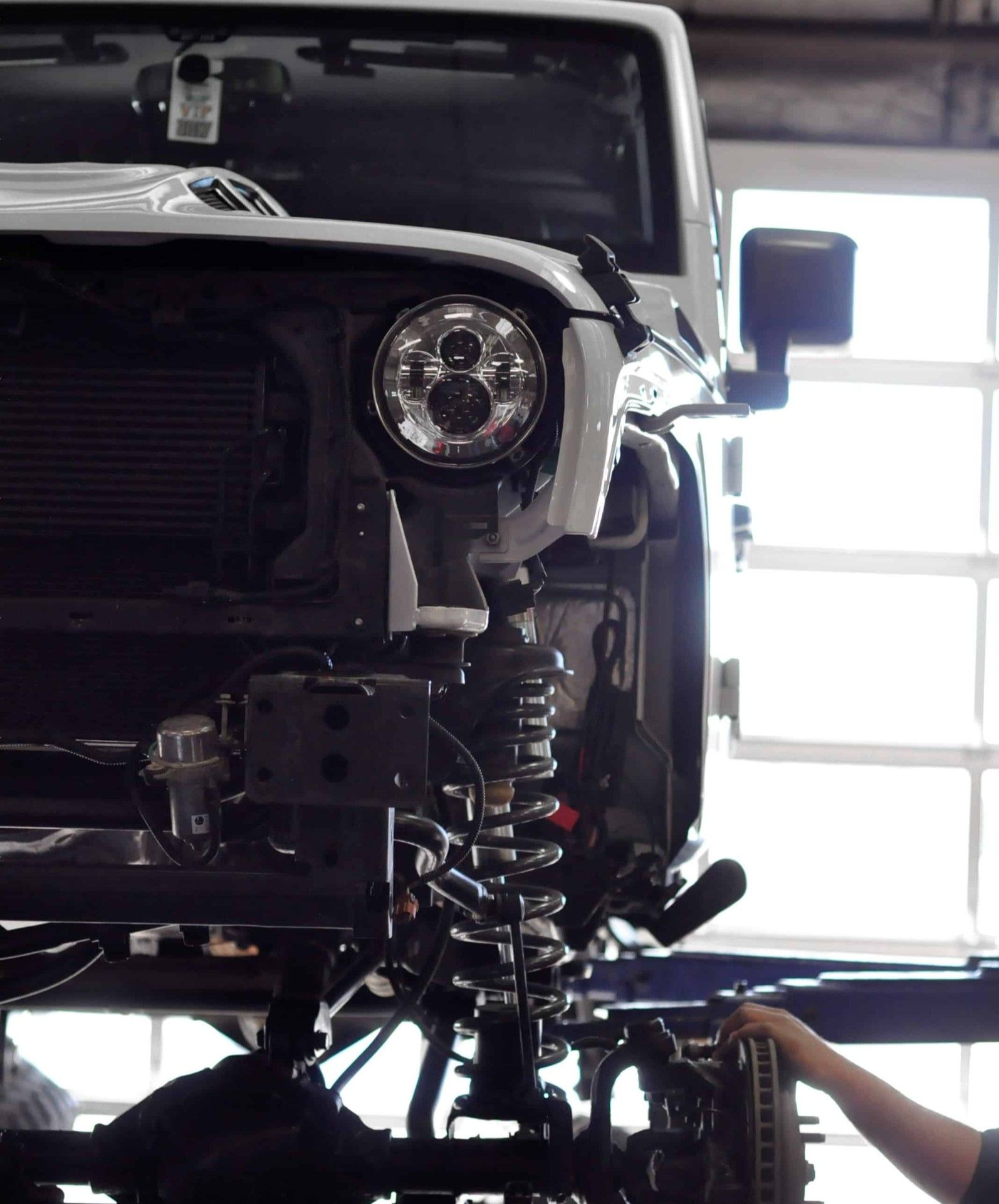
Factory-trained technicians use manufacturer specifications as a starting point, then adjust based on tire size, intended use, and driving conditions. A daily driver that sees weekend trail time needs different alignment settings than a dedicated rock crawler.
The alignment process typically takes 2-3 hours after lift installation. Shops that skip this step or rush through it create handling problems that become apparent once you're driving 70 mph on I-64 with a crosswind.
Re-Gearing Explained: Why Bigger Tires Need Different Ratios
Lift kits enable larger tires, but bigger tires change your effective gear ratio. When you go from 31-inch factory tires to 35-inch off-road tires, your engine has to work harder to turn the wheels. This affects acceleration, fuel economy, and transmission longevity.
Re-gearing involves replacing the ring and pinion gears in both front and rear axles to restore proper power delivery. The process requires complete disassembly of each differential, precise measurement and adjustment, and proper break-in procedures.
Here's how tire size affects your gearing: A Jeep Wrangler with 3.73 factory gears and 31-inch tires has an effective ratio that provides good acceleration and highway cruising. Install 35-inch tires without re-gearing, and that effective ratio drops to approximately 3.31 – making the engine work harder and shifting patterns feel sluggish.
Re-gearing to 4.56 or 4.88 ratios restores the power delivery characteristics your transmission and engine were designed to work with. Your vehicle accelerates normally, maintains highway speeds without strain, and the transmission shifts at appropriate RPM ranges.
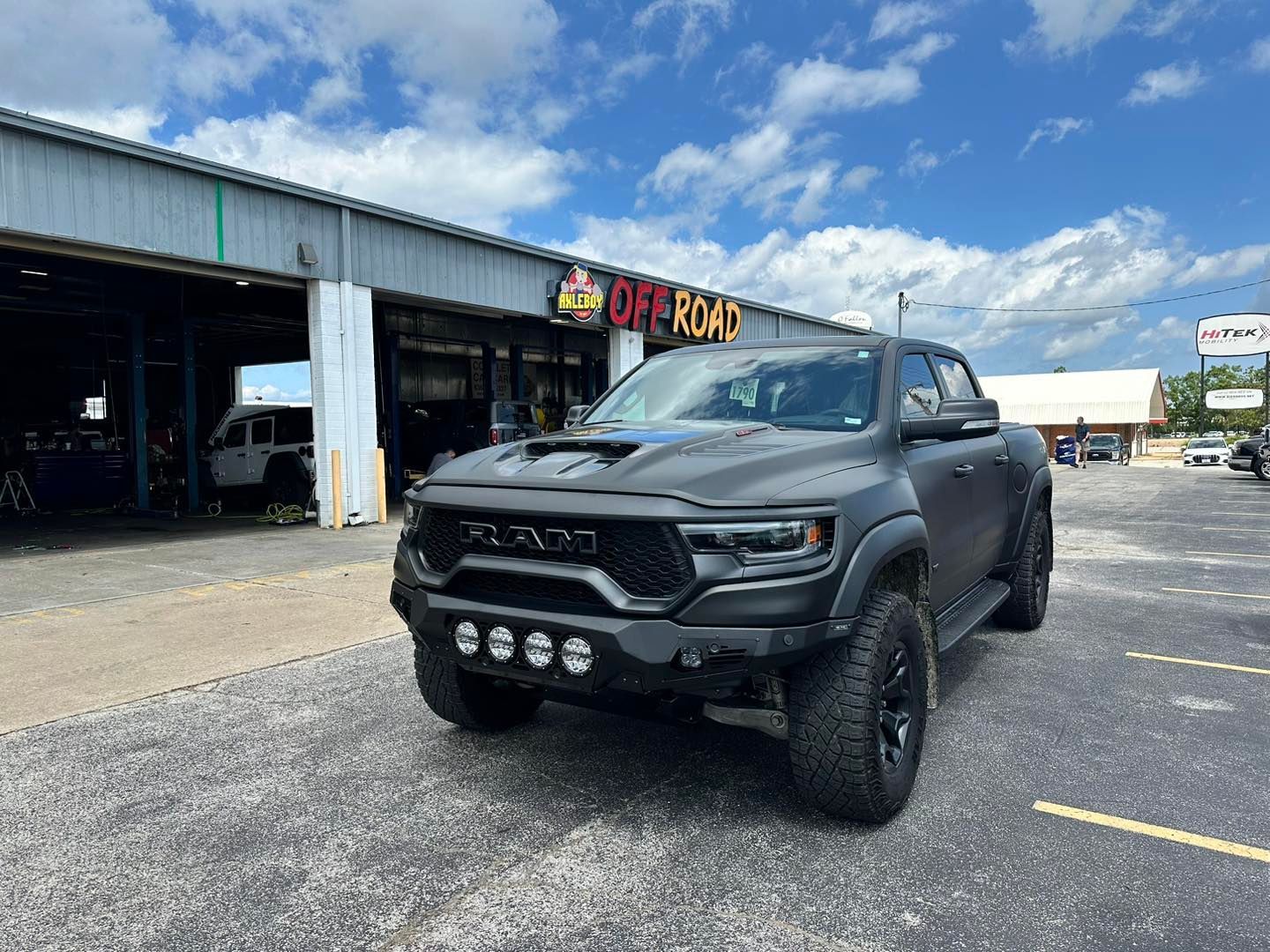
The re-gearing process takes 6-8 hours for both axles when performed by experienced differential technicians. Proper setup requires specialized tools, precise measurements, and break-in procedures that protect the new gears during the first 500 miles.
Master Certified technicians who handle re-gearing daily understand the relationship between tire size, gear ratios, and real-world performance. They can recommend the optimal ratio based on your driving mix and performance priorities.
AXLEBOY'S 12-MONTH / 12,000-MILE WARRANTY COVERAGE
Unlike typical parts warranties that cover components only, Axleboy's warranty covers both performance parts and labor for a full year or 12,000 miles. This includes lift components, re-gearing work, alignment adjustments, and any calibration needed to ensure your vehicle performs correctly on Missouri highways and off-road trails. The warranty applies whether you're commuting to work in Clayton or exploring the Ozark backcountry.
Driveline Angles and Vibration: The Details Most Shops Miss
Lifting your vehicle changes the angles between your transmission, transfer case, and axles. When these driveline angles become too steep, you'll experience vibration at highway speeds, U-joint wear, and potential driveshaft failure.
Correcting driveline angles often requires adjustable track bars, control arms, or driveshaft modifications. The specific solution depends on your lift height, vehicle platform, and intended use. A 2-inch lift on a Toyota 4Runner requires different angle corrections than a 4-inch lift on a Jeep Wrangler.
Vibration diagnosis requires understanding the relationship between lift height, suspension geometry, and driveline components. Vibration that appears at 45 mph typically indicates driveshaft angle issues. Vibration that worsens under acceleration often points to U-joint problems caused by excessive operating angles.
Experienced technicians measure driveline angles with precision instruments and compare them to manufacturer specifications. They understand which angles can be corrected with adjustment and which require component replacement or modification.
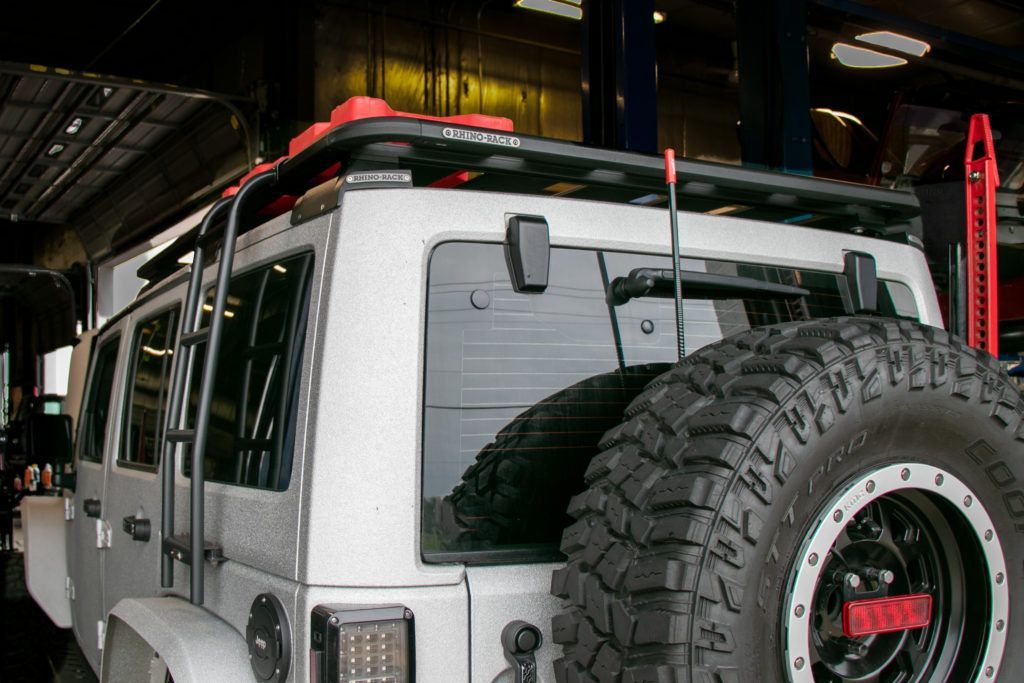
The custom off-road build process includes driveline angle verification as a standard step. This prevents vibration issues that appear weeks after installation when the customer is driving to work or heading out for a weekend trip.
Proper driveline setup ensures your lifted vehicle drives smoothly at all speeds and maintains reliability under the varied conditions Missouri drivers encounter – from stop-and-go traffic in St. Charles to sustained highway speeds crossing the state.
Brake Line and Sensor Recalibration: Safety Systems That Need Adjustment
Lifting your vehicle affects brake lines, ABS sensors, and electronic stability systems. Brake lines that were properly routed at stock height may become stretched or kinked when the axles drop to their new positions. ABS sensors may lose proper spacing to their tone rings, causing warning lights and system malfunctions.
Extended brake lines are often necessary to accommodate the increased suspension travel. These lines must be properly routed to avoid contact with moving suspension components and protected from trail damage. The brake system requires bleeding after line replacement to ensure proper pedal feel and stopping performance.
ABS and stability control systems rely on wheel speed sensors positioned at specific distances from tone rings. Lift kits can change these relationships, causing intermittent sensor readings and system faults. Proper installation includes verifying sensor operation and adjusting mounting positions when necessary.
Electronic systems in newer vehicles may require recalibration after lift installation. Tire pressure monitoring systems, electronic stability control, and hill descent control all use baseline measurements that change when you install larger tires and lift components.
Factory-trained technicians have access to dealer-level diagnostic equipment that can recalibrate these systems properly. They understand which systems need attention after lift installation and how to verify proper operation before the vehicle leaves the shop.
How a Warranty Covers the Full Job: What Should Be Included
A complete lift installation warranty covers more than just the parts. It includes the labor to install components correctly, the alignment work needed for proper handling, and any adjustments required to ensure all systems function as designed.
Here's what comprehensive warranty coverage includes: lift components themselves, installation labor, post-install alignment, brake line extensions, sensor adjustments, and any calibration needed for electronic systems. The warranty should also cover re-work if vibration or handling issues appear after installation.
Warranty coverage becomes critical when issues develop weeks or months after installation. A lifted vehicle that develops vibration at highway speeds needs diagnosis and correction – work that can cost hundreds of dollars if you're paying out of pocket at a different shop.
The 12-month / 12,000-mile warranty period reflects the reality that lift-related issues don't always appear immediately. Components may settle, alignment may shift, or electronic systems may develop faults as the vehicle accumulates miles in real-world conditions.
Shops that stand behind their work with comprehensive warranties demonstrate confidence in their installation process and commitment to customer satisfaction. They understand that a proper lift job includes everything needed to make the vehicle perform correctly, not just the parts installation.
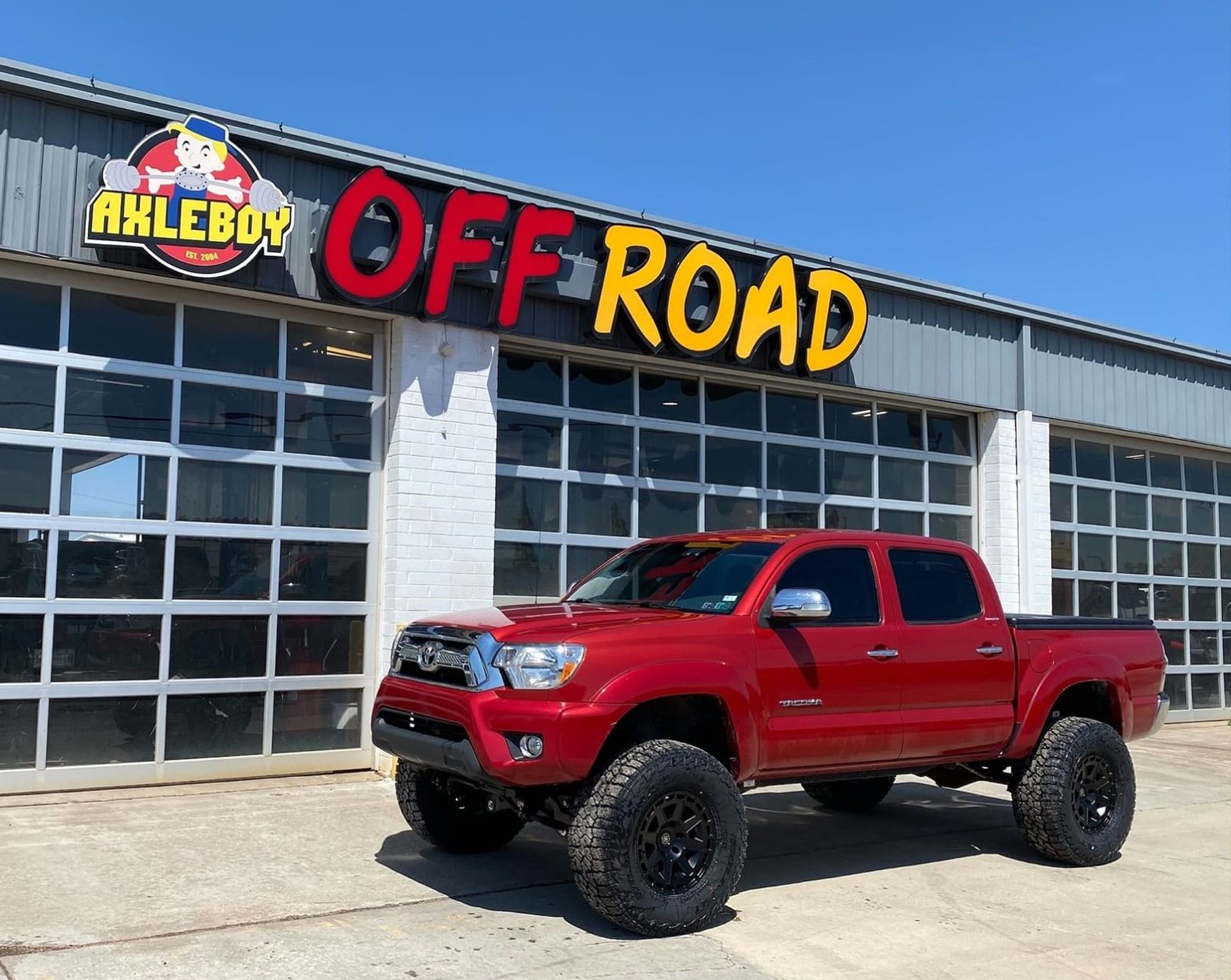
When evaluating lift installation options, ask specifically what the warranty covers and for how long. A parts-only warranty from the manufacturer doesn't protect you if installation errors cause problems down the road.
Post-Install Steps That Ensure Long-Term Performance
The work that happens after lift kit installation determines whether your investment delivers reliable performance or creates ongoing problems. Here are the essential steps that complete the process:
- Comprehensive alignment using specifications appropriate for your new suspension geometry and tire size.
- Driveline angle measurement and correction to eliminate vibration and prevent component wear
- Brake line inspection and replacement with properly routed extended lines if needed
- ABS and stability control sensor verification and adjustment for proper system operation
- Electronic system recalibration for vehicles with tire pressure monitoring and stability control
- Test drive evaluation covering city driving, highway speeds, and parking lot maneuvers
- Final inspection checklist covering all modified systems and components
Each step requires specific tools, knowledge, and time. Shops that rush through these procedures or skip steps entirely create problems that become the customer's responsibility to fix later.
The total time for proper post-install work typically adds 4-6 hours to the installation process. This includes alignment time, system checks, and road testing to verify performance before delivery.
Signs Your Lift Was Done Wrong: What to Watch For
Problems with lift installation typically become apparent within the first few hundred miles of driving. Here are the warning signs that indicate incomplete or improper post-install work:
- Steering wheel vibration at highway speeds, especially between 45-65 mph
- Vehicle pulls to one side or requires constant steering corrections on flat roads
- ABS, traction control, or stability control warning lights that stay illuminated
- Unusual tire wear patterns appearing within the first 1,000 miles
- Brake pedal feel that's spongy or requires more pressure than before the lift
These symptoms indicate that critical post-install steps were skipped or performed incorrectly. Addressing them requires going back to the fundamentals – proper alignment, driveline angle correction, and system calibration.
The cost to fix these problems after the fact often exceeds what proper installation would have cost initially. You'll pay diagnostic time, parts replacement, and labor at shop rates while dealing with a vehicle that doesn't drive correctly.
Before choosing a shop for lift installation, ask about their post-install process and what's included in their labor warranty. Understanding the differences between lift kit brands matters, but proper installation and post-install work matter more for daily driving performance.
Why the Work After Installation Matters Most
The lift kit components determine your vehicle's potential, but the work that happens after installation determines whether that potential becomes reality. Proper alignment, re-gearing, and system calibration separate vehicles that perform well from those that create ongoing problems.
In the St. Louis area, your lifted vehicle needs to handle everything from Highway 270 traffic to Ozark trail conditions. This dual-purpose requirement means the post-install work must address both on-road manners and off-road capability.
Factory-trained technicians who understand both the mechanical and electronic aspects of modern vehicles can complete this work correctly the first time. They have the diagnostic equipment, alignment capabilities, and differential experience needed to handle every aspect of the installation process.
The difference between a parts swap and a proper build comes down to accountability. Shops that warranty their complete process – including all post-install work – demonstrate confidence in their ability to deliver a vehicle that performs correctly in all conditions.
Your investment in a lift kit should result in a vehicle that drives better than it did stock, not one that requires constant attention and creates new problems. The work that happens after the parts go on determines which outcome you experience.
Frequently Asked Questions
How long does the complete lift kit installation process take including all post-install work?
Common lift installations typically require 4 to 8 hours of labor once the vehicle is in the bay, but comprehensive builds that include re-gearing and full calibration can take 1 to 2 weeks depending on part availability and customization depth. The post-install work including alignment, driveline angle correction, and system calibration typically adds 4-6 hours to ensure everything functions properly. We'll provide a specific timeline based on your vehicle and build requirements during consultation.
What exactly is covered under your 12-month/12,000-mile warranty?
Our warranty covers both performance parts and labor for lift components, re-gearing work, alignment adjustments, and any calibration needed to ensure your vehicle performs correctly. This includes covering re-work if vibration or handling issues appear after installation, unlike typical parts-only warranties. The 12-month/12,000-mile period reflects that lift-related issues don't always appear immediately as components settle and the vehicle accumulates real-world miles.
Do I really need re-gearing if I'm just adding a moderate lift and slightly larger tires?
Re-gearing becomes necessary when tire size changes significantly affect your vehicle's effective gear ratio and performance. Going from 31-inch to 35-inch tires without re-gearing makes your engine work harder, affecting acceleration, fuel economy, and transmission longevity. Our Master Certified technicians can evaluate your specific setup and recommend whether re-gearing is needed based on your tire size and driving requirements.
Will my lifted vehicle still drive normally on highways and city streets?
A properly installed lift with complete post-install work should maintain or improve your vehicle's on-road performance while adding off-road capability. Every build must perform well on Missouri highways during the week and on trails during weekends. If critical steps like alignment, driveline angle correction, and system calibration are skipped, you'll experience vibration, wandering, and poor handling that makes daily driving problematic.
What happens if I experience problems weeks or months after the lift installation?
Our 12-month/12,000-mile warranty covers any issues that develop after installation, including vibration, handling problems, or system malfunctions related to the lift work. Problems that appear later often indicate that post-install steps were incomplete or performed incorrectly. We handle diagnosis and correction under warranty, unlike shops that only cover the initial parts installation and leave you responsible for fixing issues that develop over time.
More Posts From Our Blog